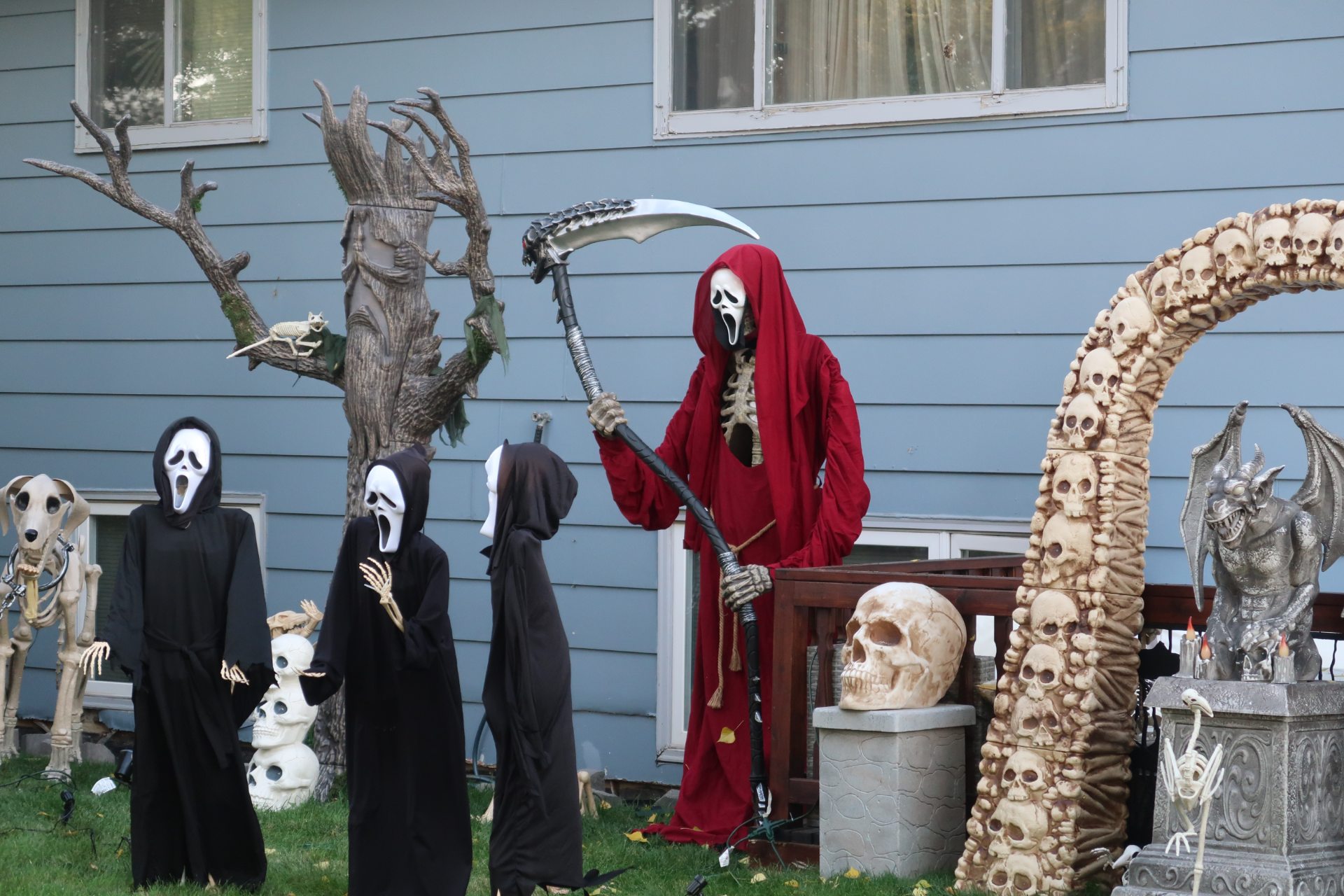
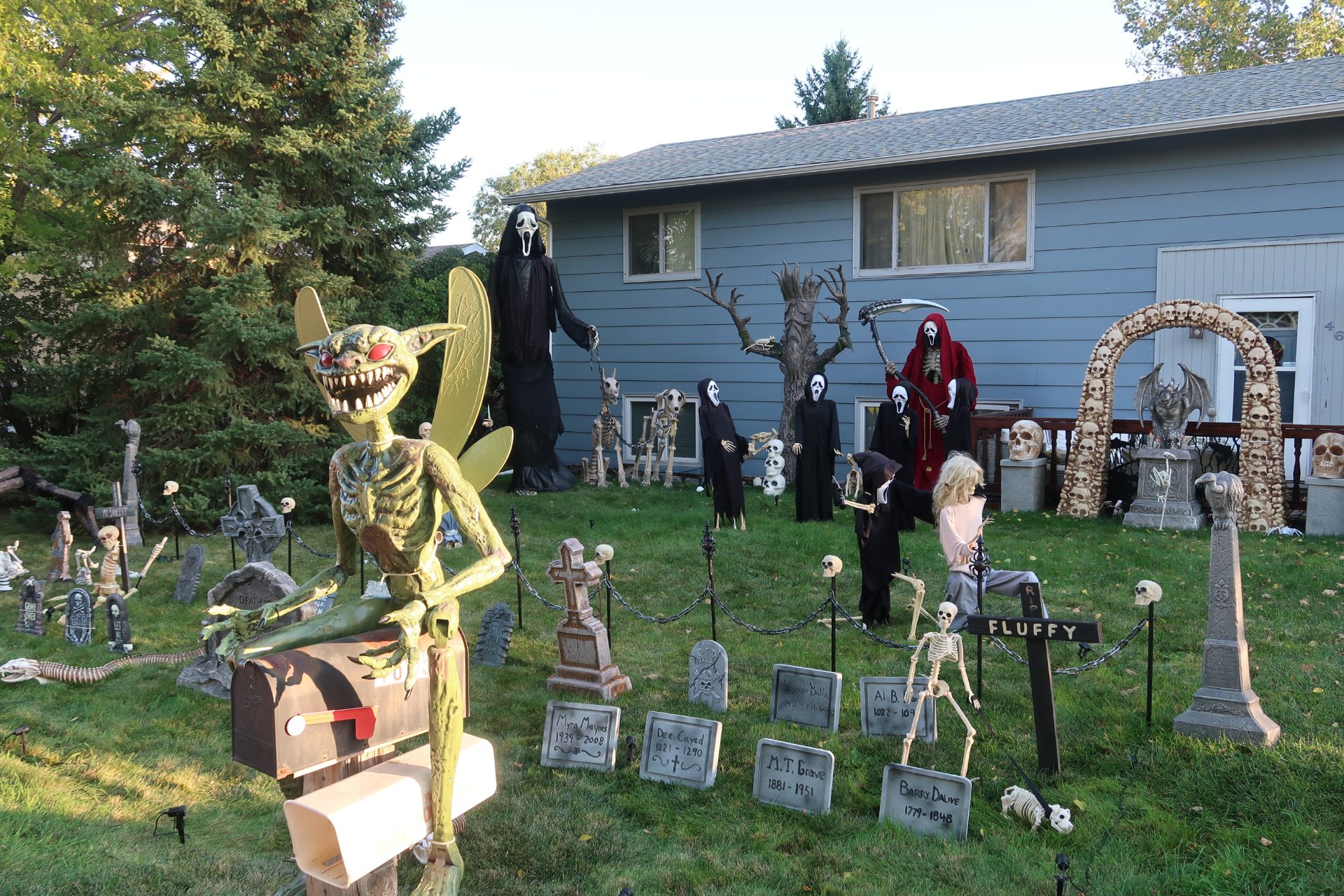
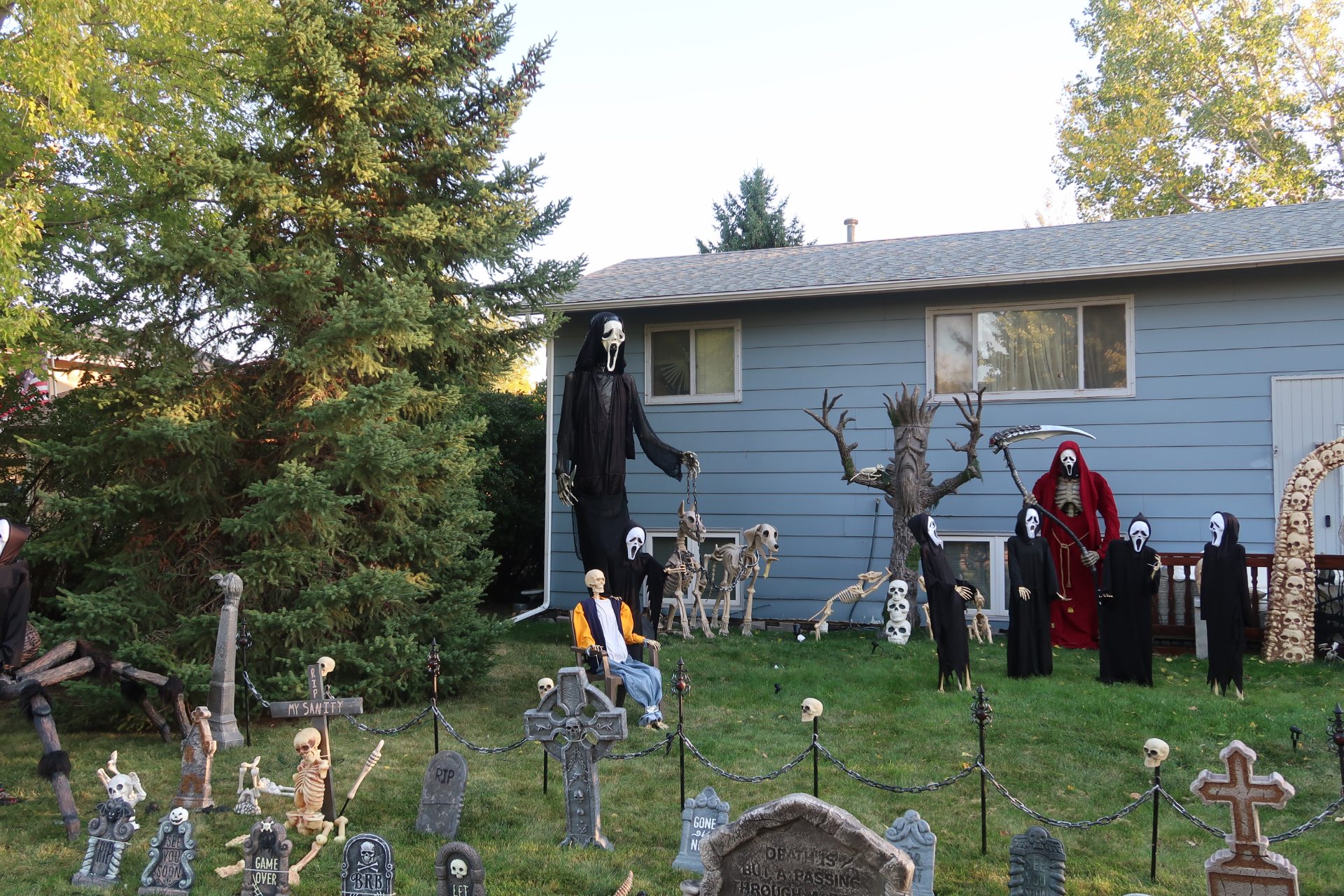
Halloween has a way of changing the look of a neighborhood, sometimes one front yard at a time. A porch that was ordinary yesterday suddenly has pumpkins, decorations, and a little personality. People notice those things, even when they are simply passing by on their way somewhere else. A display might start a conversation between neighbors who usually do little more than wave. It can give children something to look forward to and adults something to talk about. Of course, decorations alone do not create a strong community, and I would not pretend they do. But they can make it easier for people to acknowledge one another and find some common ground. That is what came to mind when a man named Erick introduced me to Theresa, whose Halloween decorations are the subject of these photographs.
What the research tells us
There is research behind the idea that the way people decorate their homes can say something about neighborhood life. In 1985, Barbara B. Brown and Carol M. Werner published a study in Environment and Behavior looking at social cohesiveness, territoriality, and holiday decorations. Their work considered Halloween and Christmas displays in relation to neighbors and the places where they lived. The researchers reported connections between decorating patterns and aspects of neighborhood attachment. That finding is interesting because a decorated home is something almost anyone walking down the street can see. Still, an association is not proof that hanging decorations causes people to trust one another or become friends. It may also be that neighbors who already feel connected are more inclined to decorate, or that several things are happening at once. What the study gives us is a useful reason to pay attention to these small public gestures without claiming they can solve the bigger challenges communities face.
“Sometimes an introduction and a little creativity are enough to open the door to a conversation.”
Theresa’s contribution
Theresa is the person who put the work into the Halloween decorations featured here, and that deserves recognition in its own right. Decorating takes an idea and the willingness to spend time bringing it to life. The finished display is personal, but it is also visible to other people. Someone can appreciate it without knowing Theresa or having any particular interest in Halloween. Another person might stop to ask how something was made, or simply offer a compliment. Those exchanges may be brief, yet they are part of the everyday contact that helps neighbors become familiar with one another. Community involvement does not always arrive in the form of a public meeting, a funded project, or a large organized event. Sometimes it looks like one person putting care into a place and giving everybody else a chance to enjoy it.
Why Erick’s introduction matters
There is another part of this story I do not want to overlook, and that is Erick. He introduced me to Theresa, and without that introduction I might never have learned who was behind these decorations. It was a simple connection between people, not a formal program or an organized campaign. Yet that is often how a story begins, with somebody taking the time to point out what another person is doing. Not everyone celebrates Halloween, and we should not mistake one holiday tradition for the whole identity of a neighborhood. The broader point is that people strengthen community when they notice one another, share their talents, and help good work become visible. At Native Sun Media Foundation, our reporting needs room for those everyday moments alongside investigations and stories about public institutions. Theresa brought the creativity, Erick made the introduction, and these photographs give us a way to recognize both the decorations and the human connection behind them.